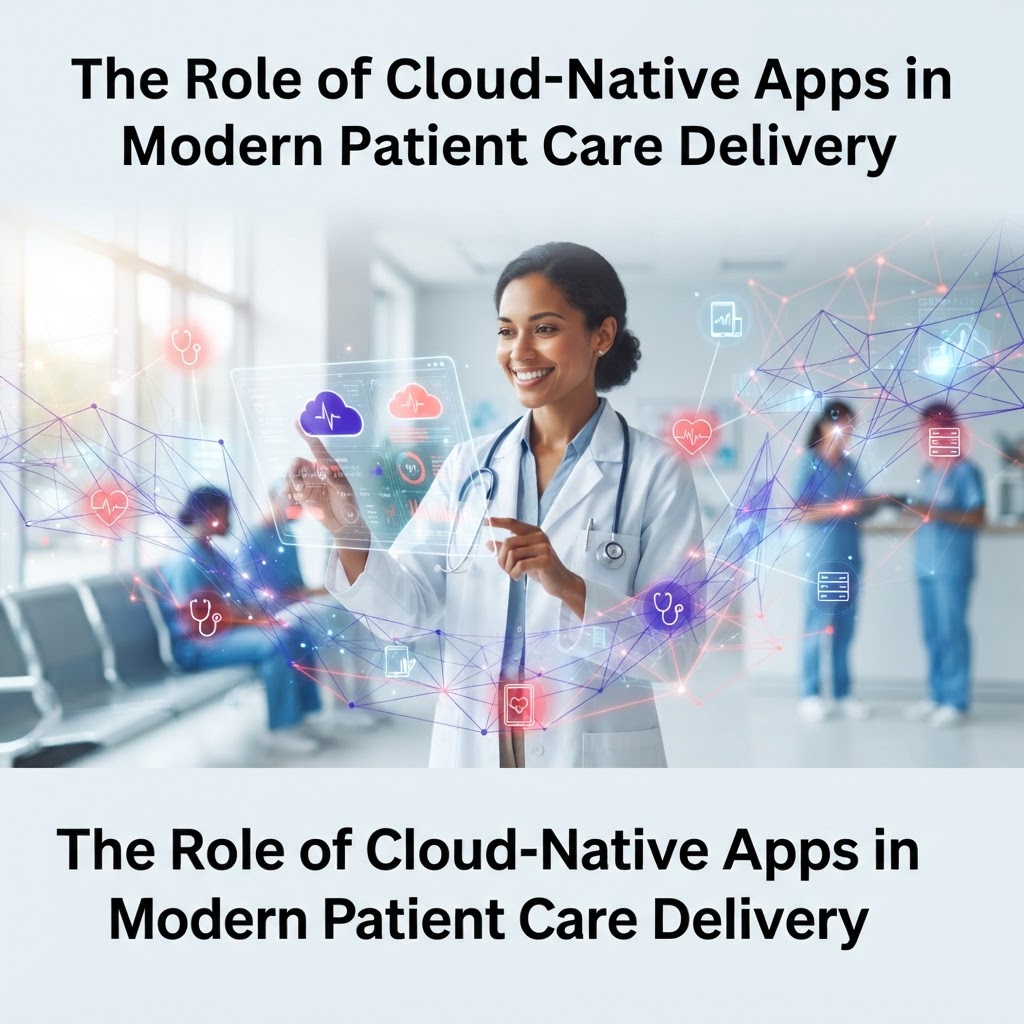
The modern healthcare ecosystem is undergoing a seismic shift, moving away from monolithic, on-premises legacy systems toward agile, resilient digital architectures. As patient expectations for real-time access and personalized care reach unprecedented heights, the rigidity of traditional IT infrastructure has become a bottleneck for innovation. Cloud-native applications—defined by their use of microservices, containerization, and dynamic orchestration—are no longer merely an IT upgrade; they are the fundamental bedrock of modern patient care delivery. At SoftwareVerdict, our research indicates that healthcare organizations leveraging cloud-native architectures report a 35% improvement in deployment velocity and significantly higher rates of system uptime compared to those relying on legacy virtual machine-based deployments.
The Architectural Shift: From Monoliths to Microservices
For decades, healthcare providers were tethered to monolithic Electronic Health Records (EHR) systems. While these systems provided stability, they were notorious for "spaghetti code" dependencies, long release cycles, and an inability to scale individual components. A cloud-native approach fundamentally alters this paradigm by decomposing applications into loosely coupled microservices.
In a clinical environment, this modularity is transformative. For example, a hospital’s patient portal, billing engine, and diagnostic imaging service can be updated and scaled independently. If the diagnostic imaging module requires a surge in compute power to process high-resolution MRI data, the hospital can scale that specific microservice on a managed Kubernetes cluster without impacting the availability of the patient scheduling portal. According to the Cloud Native Computing Foundation (CNCF), the adoption of these technologies in highly regulated industries like healthcare is driven by the need for "self-healing" infrastructure, where automated health checks restart failed containers instantly, ensuring that critical care services remain uninterrupted.
Implementing a microservices architecture is not without its trade-offs. The inherent complexity of managing inter-service communication (often handled via service meshes like Istio or Linkerd) requires a higher degree of DevOps maturity. Our analysts at SoftwareVerdict frequently advise healthcare CTOs that the "cost" of moving to cloud-native is not just the cloud bill, but the cultural and technical investment in observability and distributed systems management.
Data Interoperability and the API-First Mandate
Patient care is only as good as the information available to the clinician at the point of care. However, data silos remain one of the most persistent challenges in digital health. Cloud-native applications inherently favor API-first designs, which are essential for achieving the interoperability standards mandated by the 21st Century Cures Act. By utilizing FHIR (Fast Healthcare Interoperability Resources) APIs natively within a containerized environment, organizations can create a seamless flow of information between disparate clinical systems.
"Healthcare organizations that prioritize an API-first, cloud-native strategy demonstrate a 40% reduction in time-to-market for new patient-facing features, as the infrastructure allows for the rapid integration of third-party diagnostic tools and telehealth platforms without a full system overhaul." — SoftwareVerdict Industry Analysis, 2023.
When services are built to communicate through standardized RESTful or GraphQL APIs, a hospital can integrate a machine learning model for cardiac arrhythmia detection into their existing clinical workflow in weeks rather than months. This agility allows providers to integrate best-of-breed diagnostic tools directly into the clinician’s existing EHR interface, minimizing "click fatigue" and maximizing the clinical value of the software.
Security, Compliance, and the Shared Responsibility Model
A primary concern for any healthcare organization migrating to the cloud is compliance with HIPAA, HITRUST, and SOC 2 Type II requirements. The move to cloud-native does not negate these responsibilities; it changes how they are executed. In a cloud-native environment, security is shifted "left"—integrated into the CI/CD pipeline rather than being treated as a final audit check.
- Immutable Infrastructure: By using container images that are never modified after deployment, IT teams can ensure that the environment running the application is exactly what was tested and audited for compliance.
- Automated Compliance Scanning: Tools integrated into the software supply chain can automatically scan containers for known vulnerabilities (CVEs) before they reach production.
- Granular Policy Enforcement: Using Open Policy Agent (OPA), healthcare organizations can enforce strict data access controls at the pod level, ensuring that patient PII/PHI is only accessible to authorized services within the cluster.
However, the shift to cloud-native also introduces the risk of "configuration drift" and identity-based attacks. As noted in the NIST Special Publication 800-190 (Guide to Container Security), the expanded attack surface of a microservices environment requires rigorous zero-trust networking. Organizations must ensure that they have centralized identity management (IAM) and robust encryption in transit between all microservices to maintain patient trust and regulatory standing.
Real-World Implementation: The Telehealth Scaling Challenge
The urgency of the COVID-19 pandemic served as a massive stress test for global healthcare IT. We witnessed a shift where organizations that had already invested in cloud-native, auto-scaling telehealth platforms thrived, while those dependent on static, server-based infrastructure struggled to handle a 500% to 1000% increase in traffic.
In a practical scenario observed by our research team, a large regional health system utilized a serverless function architecture (e.g., AWS Lambda or Google Cloud Functions) to handle patient intake forms during high-volume periods. Because the system was cloud-native, it could scale from zero to thousands of concurrent requests in seconds. Once the patient submitted the form, the compute resources spun down automatically, reducing the cost overhead to virtually zero during off-peak hours. This implementation highlights the efficiency of cloud-native: paying only for the compute cycles used, which is a significant departure from the "always-on" costs of traditional data centers.
Future-Proofing Care: The Path Forward
The journey to a cloud-native healthcare organization is iterative. It requires a transition from legacy "lift and shift" thinking to a philosophy of "cloud-optimized" design. At SoftwareVerdict, we emphasize that technology procurement should be grounded in the ability of a vendor to support container-native deployments and provide robust API documentation. Organizations should be wary of "cloud-washing"—where legacy vendors simply wrap old applications in virtual machines and call them "cloud-ready." True cloud-native applications offer the portability, scalability, and resilience that modern patient care demands.
As we look toward the future, the integration of generative AI and predictive analytics into patient care will rely entirely on the data pipelines built through cloud-native architectures. If your infrastructure is not capable of elastic scaling and real-time data ingestion, the promise of these emerging technologies will remain out of reach. For leadership teams, the decision to modernize is no longer optional; it is a clinical and financial imperative.
Final Recommendation for Procurement
When vetting software vendors, SoftwareVerdict recommends requesting the following documentation to ensure true cloud-native capabilities:
- Container Portability: Does the vendor provide OCI-compliant images that can run on any major Kubernetes distribution?
- API Specification: Does the vendor support current FHIR R4/R5 standards for all data exchange functions?
- Observability Support: Does the application expose OpenTelemetry metrics for deep monitoring by your internal SRE (Site Reliability Engineering) team?
Modernizing your digital infrastructure is the most effective way to improve the quality of patient outcomes while maintaining operational efficiency. If you are an enterprise IT leader looking to assess your current software stack against the industry standard for cloud-native maturity, contact the SoftwareVerdict team today to schedule a detailed audit of your technology roadmap. Let us help you ensure that your infrastructure is as innovative as the care you provide.