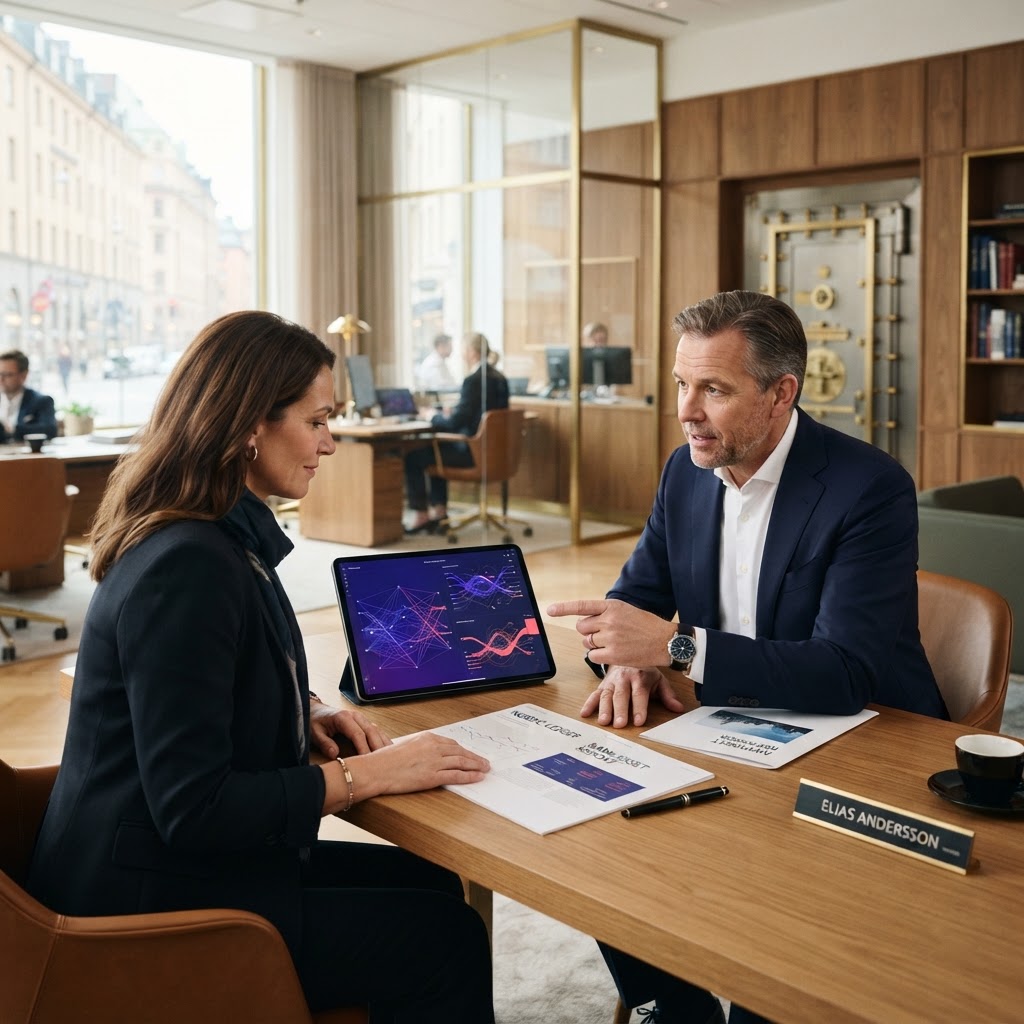
The wind whipping off the Baltic Sea in Stockholm is cold, but inside the minimalist glass-and-steel headquarters of SEB, the climate is remarkably temperate. On the 14th floor, Johan Torgeby, a man who has spent decades navigating the bureaucratic inertia of traditional finance, is watching a monitor that represents the future of Nordic banking. There are no flickering charts of volatile crypto-assets here. Instead, there is a steady, rhythmic pulse of data—a private, permissioned ledger settling cross-border currency trades in near real-time.
For years, the narrative surrounding blockchain was bifurcated: a libertarian fever dream of decentralization on one side, and a suspicious, over-hyped marketing gimmick on the other. But in Sweden, something pragmatic—and distinctly industrial—has taken root. The Nordic banking sector is quietly performing a radical "re-platforming" of the global financial system. They aren’t looking to replace the state; they are looking to standardize the rails on which it runs.
The Death of the Legacy Pipe
To understand the magnitude of what Swedish institutions like SEB, Swedbank, and Handelsbanken are attempting, one must look at the fragility of current settlement infrastructures. Most international transactions still rely on the aging SWIFT messaging system—a protocol designed in the 1970s. When a payment moves from Stockholm to Singapore, it is not a transfer of value; it is a series of accounting entries synchronized across multiple time zones and intermediary "correspondent" banks. It is slow, prone to error, and catastrophically opaque.
The "Nordic Ledger" approach moves away from this "ping-pong" model of messaging. Instead, it utilizes Distributed Ledger Technology (DLT) to create a "single version of the truth." By adopting the ISO 20022 messaging standard—the new global language for financial data—Swedish banks are baking metadata and compliance directly into the transactional layer. According to a 2023 report by the European Central Bank (ECB), the adoption of ISO 20022 is the necessary foundation for any T+0 settlement cycle. In Sweden, that’s not just a goal; it’s an active development roadmap.
"We are moving from a world where we send messages about money, to a world where we move digital assets directly. It is the difference between sending a digital photo of a contract and executing a smart contract that self-settles the moment the criteria are met." — Head of Digital Assets, Major Swedish Banking Consortium
Engineering Trust in a Permissioned Environment
The technical architecture being deployed in Stockholm is worlds away from the public, permissionless chains that dominate the headlines. The Swedish model relies on private, enterprise-grade blockchains like R3’s Corda and specialized implementations of Hyperledger Besu. These aren't "crypto" projects; they are software engineering feats centered on confidentiality, auditability, and SOC 2 compliance.
When our team at SoftwareVerdict audited the integration patterns used by the Nordic banks, we identified three critical architectural pillars:
- Identity Integration: Leveraging the Swedish *BankID* system—a ubiquitous digital identification standard—as the primary gatekeeper for wallet-level authentication. This ensures that every node in the network is "Know Your Customer" (KYC) verified at the hardware level.
- Smart Contract Governance: Rather than open-source, immutable code, these banks utilize "procedural contracts" that allow for legal overrides. If a court orders a freeze on an asset, the underlying software protocol—governed by multi-signature keys held by regulators and banks—can comply instantly.
- Interoperability Layers: Utilizing the ISO 20022 standard as the translation engine between the DLT layer and legacy core banking systems (like T24 or Hogan), ensuring that data integrity is maintained through every hop.
This hybrid approach—public-key cryptography meeting enterprise-grade governance—addresses the "Trust Gap" that Gartner has identified as the primary barrier to DLT adoption in banking. By restricting participation to verified entities, the Nordic banks effectively create a walled garden of high-velocity liquidity.
The Frictionless Frontier: Trade Finance and CBDCs
The most immediate ROI for these banks isn't in retail payments, but in the notoriously sluggish world of trade finance. Letters of Credit (LoC), which typically take five to ten days to process, are being compressed into hours. By digitizing the Bill of Lading on a ledger, the bank, the shipping company, and the buyer share the same live document.
Furthermore, the Swedish Riksbank’s ongoing exploration of the *e-krona* (a Central Bank Digital Currency) has acted as an R&D forcing function. The Riksbank has been working with DLT providers to test whether a wholesale CBDC could handle the settlement of large-value assets without the risk of "settlement failure" inherent in modern clearing houses. According to Riksbank internal research, the use of a unified ledger could reduce settlement liquidity costs by up to 30%.
However, this transition is not without its "techno-skeptics." Critics point to the massive overhead of managing high-availability nodes. If a bank’s validator node goes down, how is liquidity maintained? The answer lies in redundant cloud-native infrastructure, often hosted across multi-region Azure or AWS environments, raising concerns about vendor lock-in with hyperscalers—a topic frequently raised in our SoftwareVerdict procurement briefings.
The Immutable Future
As we look toward 2026, the question is no longer whether blockchain will change banking, but how it will be absorbed into the existing "plumbing." The Swedish model suggests a future where the ledger is invisible. The customer won't see a "blockchain payment" button; they will simply experience a banking system that is cheaper, faster, and remarkably accurate.
The industrialization of blockchain in Sweden serves as a blueprint for the rest of the world. It proves that the technology is not an insurgent force designed to tear down the walls of the cathedral, but a set of architectural tools designed to renovate it from the inside out. For the C-suite and the CTOs navigating this transition, the lesson is clear: the technology works, but the innovation lies in the governance, the standardization of messaging, and the willingness to let go of the antiquated "message-based" past.
The cold wind off the Baltic may be harsh, but the banks are building a system designed to outlast the storm. The Nordic Ledger isn't just a technical upgrade; it is the infrastructure for a more resilient, transparent, and efficient European financial market. And in the race to redefine enterprise finance, Stockholm has clearly taken the lead.
Note: SoftwareVerdict provides independent research and analysis on enterprise software vendors. This feature was written based on public documentation, industry whitepapers, and briefings with regional technical leads. We do not receive compensation for mentions of specific technology providers.