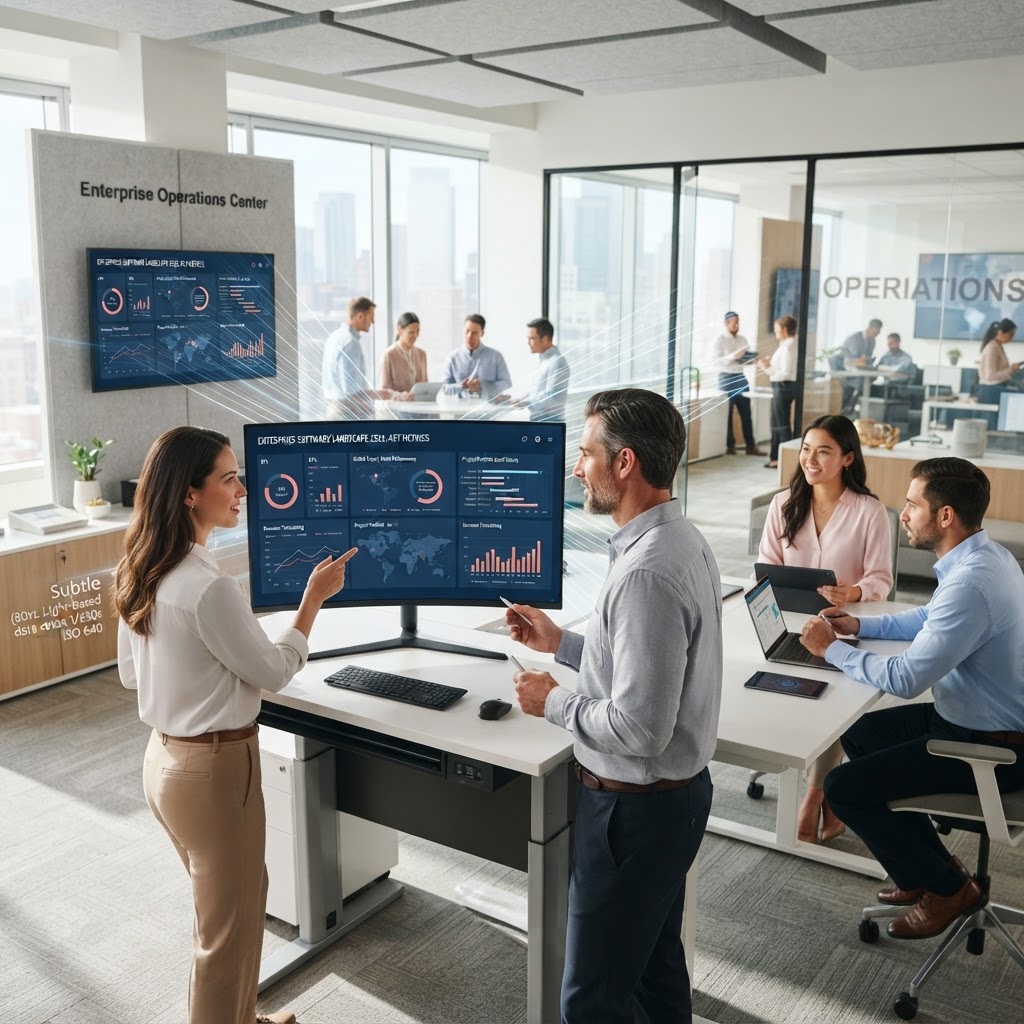
As we approach 2026, the enterprise software landscape is undergoing a tectonic shift driven by the maturity of generative AI, the consolidation of fragmented tech stacks, and an unrelenting pressure to prove ROI in a high-interest-rate environment. For the modern CIO, the challenge has evolved from mere digital transformation to digital optimization. Gone are the days of "buying for agility"; today’s procurement strategy is defined by financial discipline, rigorous vendor risk assessment, and the pursuit of interoperability. As SoftwareVerdict analysts observe, the organizations that will thrive in 2026 are those shifting their focus from feature-rich capabilities to measurable, outcome-based technology utilization.
1. The Shift from Total Cost of Ownership (TCO) to Total Value of Ownership (TVO)
Historically, CIOs have been obsessed with TCO—the sum of licensing, implementation, and maintenance costs. However, as software sprawl continues to bleed enterprise budgets, the industry is moving toward Total Value of Ownership (TVO). According to recent research from Gartner, CIOs are increasingly evaluating software not by its sticker price, but by its ability to accelerate time-to-market and displace legacy technical debt.
In 2026, this shift requires a granular look at "shelfware"—unused or underutilized licenses. Our field research at SoftwareVerdict indicates that mid-to-large enterprises frequently over-provision SaaS seats by 20% to 30%. To combat this, CIOs must implement:
- Automated License Reclamation: Utilizing SAM (Software Asset Management) tools to identify and automatically de-provision dormant accounts.
- Usage-Based Billing Models: Negotiating contracts that align costs with consumption rather than static user counts, a trend accelerated by cloud infrastructure providers.
- Value Realization Tracking: Establishing a direct link between software deployment metrics and specific KPIs, such as reduction in support ticket volume or improvement in developer throughput.
A critical trade-off here is the administrative burden of monitoring. While aggressive reclamation saves budget, it can inadvertently stifle innovation if teams feel they must "hoard" licenses to ensure access. Organizations must strike a balance by maintaining a "buffer zone" of flexible, non-production environments.
"The maturity of enterprise software procurement in 2026 will be defined by the transition from passive purchasing to active financial engineering. CIOs who fail to measure the delta between license cost and actual business process improvement are essentially operating with a blindfold on." — SoftwareVerdict Research Team
2. The Compliance-First Procurement Model: NIST and SOC 2 Integration
With the rise of AI-driven tools, the security perimeter is no longer just a firewall; it is the software supply chain itself. In 2026, security is no longer an "after-purchase" validation; it is the primary gatekeeper. According to the ISO/IEC 27001:2022 standards, supply chain risk management is now a critical component of institutional resilience.
CIOs must demand transparency in vendor SOC 2 Type II reports, focusing specifically on the vendor’s sub-processor management. Our data shows that enterprises using automated vendor risk management (VRM) platforms reduce their procurement cycle time by 40% while simultaneously increasing their security posture. Key metrics to track include:
- Mean Time to Remediate (MTTR): How quickly do vendors patch zero-day vulnerabilities in their own stack?
- Data Sovereignty Alignment: Ensuring that as SaaS providers move toward decentralized cloud architectures, data residency stays compliant with GDPR and CCPA.
- AI Transparency Scores: Evaluating whether vendors provide clarity on the training data used for their LLMs—a major concern for proprietary data protection.
It is important to acknowledge that perfection in security is a myth. Over-regulating small, high-growth vendors can block critical innovation. A tiered risk approach—where low-data-risk applications follow an expedited path—is the hallmark of an authoritative CIO strategy.
3. Navigating the Era of "Stack Consolidation"
The "best-of-breed" strategy that dominated the 2010s is yielding to a platform-centric approach. CIOs are tired of managing hundreds of disparate APIs that break during every update. The 2026 mandate is consolidation. We are seeing a massive shift toward "Platform Suites"—Microsoft, Salesforce, and ServiceNow are expanding their ecosystems to minimize the need for external integrations.
However, this trade-off is significant: vendor lock-in. By centralizing your stack, you improve interoperability and reduce integration complexity, but you increase your dependency on a single vendor's roadmap. To navigate this, CIOs should utilize a "Platform Core + Satellite" strategy:
- The Core: Standardize on one or two major cloud/SaaS platforms for 80% of your operational needs.
- The Satellites: Utilize specialized, best-of-breed tools for niche business processes, but ensure they are connected via robust, standardized middleware (e.g., MuleSoft or Boomi).
- Exit Strategy Mapping: For every core vendor, maintain a documented "portability plan" detailing how data could be migrated should the relationship deteriorate or the vendor’s security posture fail.
4. Generative AI Metrics: Moving Beyond the Hype
In 2026, "AI-ready" is no longer a selling point; it is a baseline expectation. The challenge for CIOs is moving from experimental RAG (Retrieval-Augmented Generation) implementations to production-grade AI that impacts the P&L. According to IDC, by 2026, nearly 50% of IT spending will be allocated toward AI-infused software features.
To avoid "AI-washing," CIOs must shift their evaluation metrics to focus on:
- Hallucination Rates: Measuring the accuracy of outputs in real-world scenarios rather than vendor-provided demos.
- Integration Latency: How much time does the AI process add to standard workflows?
- AI-Driven ROI: A direct measurement of hours saved per employee versus the per-seat premium charged for AI features.
Be wary of "hidden" costs. Many vendors are introducing consumption-based pricing for AI features (tokens or compute-seconds) that are notoriously difficult to forecast. We advise clients to implement strict budget caps on API usage and prioritize vendors who offer predictable, flat-rate enterprise AI tiers.
5. Managing the Human-Tech Intersection
Finally, technology is only as effective as the workforce's ability to adopt it. A common pitfall observed by our analysts is the underfunding of change management. If a firm spends $1M on a new ERP but only $50,000 on training, the utilization rate will inevitably lag. Data from McKinsey & Company suggests that projects with robust change management initiatives are 30% more likely to meet their projected financial targets.
In 2026, the CIO must act as the Chief Productivity Officer. This means tracking metrics such as "time-to-proficiency" for new software deployments and "feature adoption velocity." If employees aren't using the advanced features of your software stack within 90 days, the investment is failing regardless of the contract terms.
Conclusion and Next Steps
The 2026 enterprise software landscape is one of consolidation, security-first procurement, and ruthless efficiency. CIOs who view software through the lens of TVO, prioritize vendor risk management, and cautiously integrate AI are the ones who will lead their organizations through this period of economic volatility. The goal is to build an ecosystem that is both resilient to external threats and flexible enough to pivot when market conditions change.
At SoftwareVerdict, we specialize in providing the data-driven insights needed to optimize your software spend and security posture. We encourage you to audit your current stack against the metrics outlined in this article. Are your vendors adding value, or are they just adding complexity? Are your security controls protecting your data or hindering your team's agility?
Ready to take control of your software landscape? Schedule a discovery call with our analyst team today to receive a personalized benchmark report comparing your current vendor portfolio against industry standards for 2026.
Transparency Note: SoftwareVerdict provides independent research and benchmarking data. While we maintain partnerships with various software service providers, our research methodology is strictly objective and is not influenced by vendor compensation or affiliate arrangements.