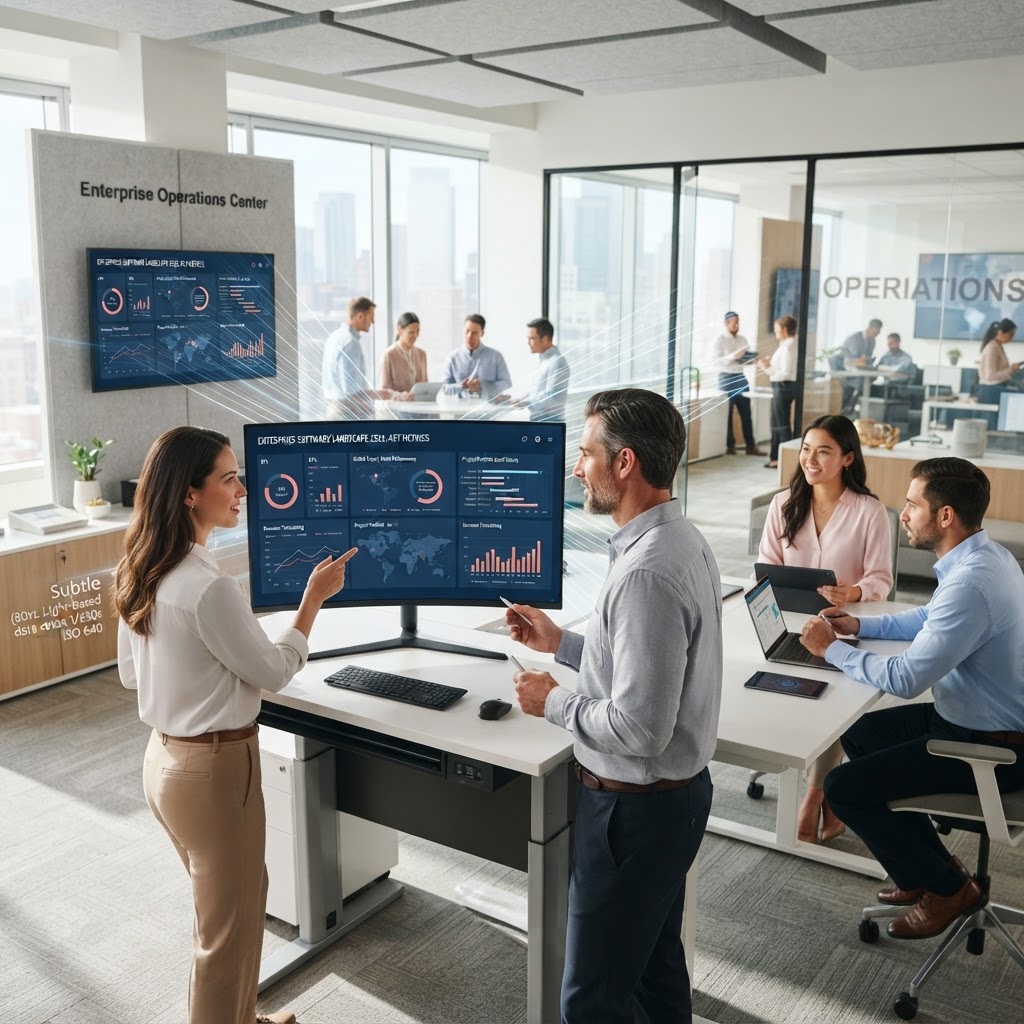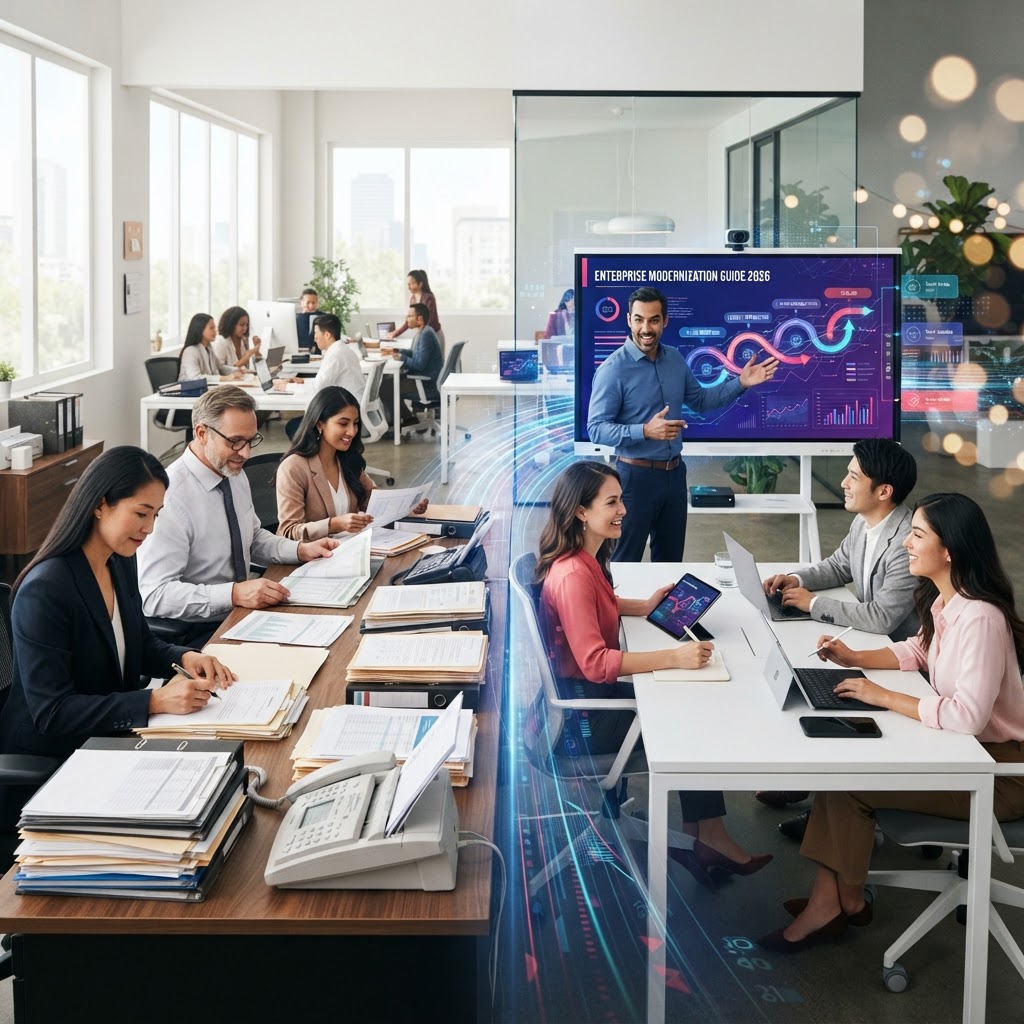
For many global enterprises, the "technical debt" accrued over the last two decades has shifted from a manageable line item to an existential risk. As we navigate the mid-point of the decade, the urgency to scale legacy infrastructure is no longer driven solely by efficiency, but by the requirement to support generative AI workloads, real-time data processing, and highly distributed workforce models. By 2026, the divide between "digitally native" enterprises and those tethered to monolithic, on-premises data centers will be effectively insurmountable for those who fail to execute a strategic modernization pivot. At SoftwareVerdict, our research indicates that while 85% of large organizations have initiated modernization efforts, less than 30% have successfully transitioned their core business logic to scalable, cloud-native architectures.
The State of Legacy Infrastructure in 2026: Beyond "Lift and Shift"
The traditional "lift and shift" migration strategy—moving virtual machines from an on-premises data center to a public cloud—has largely been dismissed as a failure in terms of ROI. Industry data from McKinsey & Company suggests that organizations focusing strictly on infrastructure rehosting often fail to capture more than 20% of the potential cloud value, largely because they neglect to re-architect for cloud-native services like serverless computing, managed databases, and event-driven microservices.
Modernization in 2026 is defined by "Refactoring" and "Re-architecting." It requires a transition from tightly coupled monolithic applications to modular, API-first architectures. The challenge lies in the "Brownfield" environment: enterprises must keep the lights on for mission-critical core systems while simultaneously building the "Greenfield" services that will drive future revenue. This creates a state of permanent hybridity, where legacy mainframes and modern Kubernetes clusters must coexist in a unified control plane.
Key Strategies for Enterprise Modernization
Implementing a successful modernization roadmap requires a nuanced understanding of application interdependencies. Our research methodology at SoftwareVerdict identifies four primary patterns for systemic evolution:
- The Strangler Fig Pattern: Gradually replacing specific functionalities of the legacy system with new microservices. Over time, the legacy system "withers" until it can be decommissioned entirely. This is the lowest-risk approach for high-stakes core systems.
- API-Led Connectivity: If the underlying legacy logic is too fragile to touch, wrap it in a robust API layer. This allows modern web and mobile applications to interact with legacy data without requiring a deep-code migration of the backend.
- Database Decoupling: Moving away from centralized, monolithic databases is often the hardest part of the journey. Implementing Change Data Capture (CDC) to sync legacy databases with cloud-native data lakes allows for real-time analytics without stressing the core transaction engine.
- Containerization and Orchestration: Wrapping monolithic processes in containers provides a consistent operational environment, regardless of whether they run in a private data center or a public cloud environment like AWS, Azure, or GCP.
"Modernization is not a destination but a shift in organizational posture. According to Gartner, by 2027, over 70% of enterprises will increase their spending on platform engineering to solve the complexity of hybrid and multi-cloud environments, a significant jump from 2024 levels."
Addressing Technical and Organizational Constraints
A common pitfall we observe at SoftwareVerdict is the "All-or-Nothing" fallacy. IT leaders often attempt to force a hard cutover, leading to significant service disruptions and organizational pushback. Real-world implementation demonstrates that incremental modernization—often termed "Iterative Modernization"—provides better visibility into ROI and allows for mid-course corrections.
However, the trade-offs are significant. Maintaining two disparate stacks—legacy and modern—increases operational overhead and security risk. Your security team must now manage "split-brain" identity and access management (IAM) systems. We recommend aligning your infrastructure security posture with the NIST Cybersecurity Framework (CSF) 2.0, ensuring that governance is centralized even as the technical architecture is decentralized.
Furthermore, one must account for the "Talent Gap." Modernizing to a serverless or microservices architecture requires a specialized set of skills that legacy COBOL or Java developers may not possess. Organizations must budget for significant internal upskilling or leverage managed services providers to bridge the gap during the transition period.
Integration Challenges and Middleware Architecture
In 2026, the complexity of system integration has grown exponentially due to the rise of SaaS sprawl. An average enterprise now manages hundreds of distinct SaaS applications, many of which lack native integration with legacy ERP or CRM systems. Modern modernization is as much about data integration as it is about infrastructure.
To succeed, enterprises must invest in a robust Event Mesh or Message Broker architecture (such as Apache Kafka or Confluent). This allows disparate systems—both old and new—to communicate asynchronously. By moving away from point-to-point integrations, organizations reduce the fragility of their ecosystem. When one component fails, the message broker ensures that data is queued and processed, preventing cascading failures across the enterprise.
Transparency Note: While SoftwareVerdict maintains deep expertise in infrastructure tooling, we advise procurement teams to evaluate middleware vendors based on their ability to handle "legacy adapters"—connectors specifically designed to interface with mainframe or older SQL environments without requiring custom code modification.
Future-Proofing Your Roadmap
As we look toward the end of the decade, the focus is shifting toward "Composable Infrastructure." This concept involves modularizing not just applications, but the infrastructure itself, treating compute, storage, and networking as programmable services. This capability is critical for supporting emerging technologies like Edge Computing and localized LLM (Large Language Model) inference, which require low latency and localized compute power.
To maintain a competitive edge, your modernization roadmap must include:
- Observability Over Monitoring: Transitioning from simple uptime monitoring to deep-trace observability (using tools like OpenTelemetry) is mandatory for diagnosing issues in distributed systems.
- Compliance-as-Code: Integrating SOC 2 and ISO 27001 requirements directly into your CI/CD pipelines to ensure that security is enforced programmatically rather than through manual audits.
- FinOps Integration: With the variable cost model of cloud infrastructure, organizations must implement FinOps practices early to prevent "cloud bill shock," which remains a primary blocker for long-term modernization success.
Conclusion and Next Steps
Scaling legacy infrastructure is an ambitious undertaking that requires rigorous planning, a phased approach, and a clear understanding of the trade-offs between speed and stability. The enterprises that will lead their sectors in 2026 and beyond are those that view modernization as a continuous cycle of refinement rather than a one-time project. By adopting modular patterns, prioritizing data integration, and investing in both the technology and the people who manage it, you can turn your legacy burden into an engine for innovation.
At SoftwareVerdict, we specialize in benchmarking enterprise software against the complexities of real-world infrastructure. If your organization is struggling to map its legacy modernization journey, our analysts are prepared to help you assess your current tech stack, identify high-impact integration points, and select the right vendors to support your transition.
Ready to modernize your infrastructure with data-backed insights? Contact the SoftwareVerdict research team today to schedule your enterprise architecture consultation.